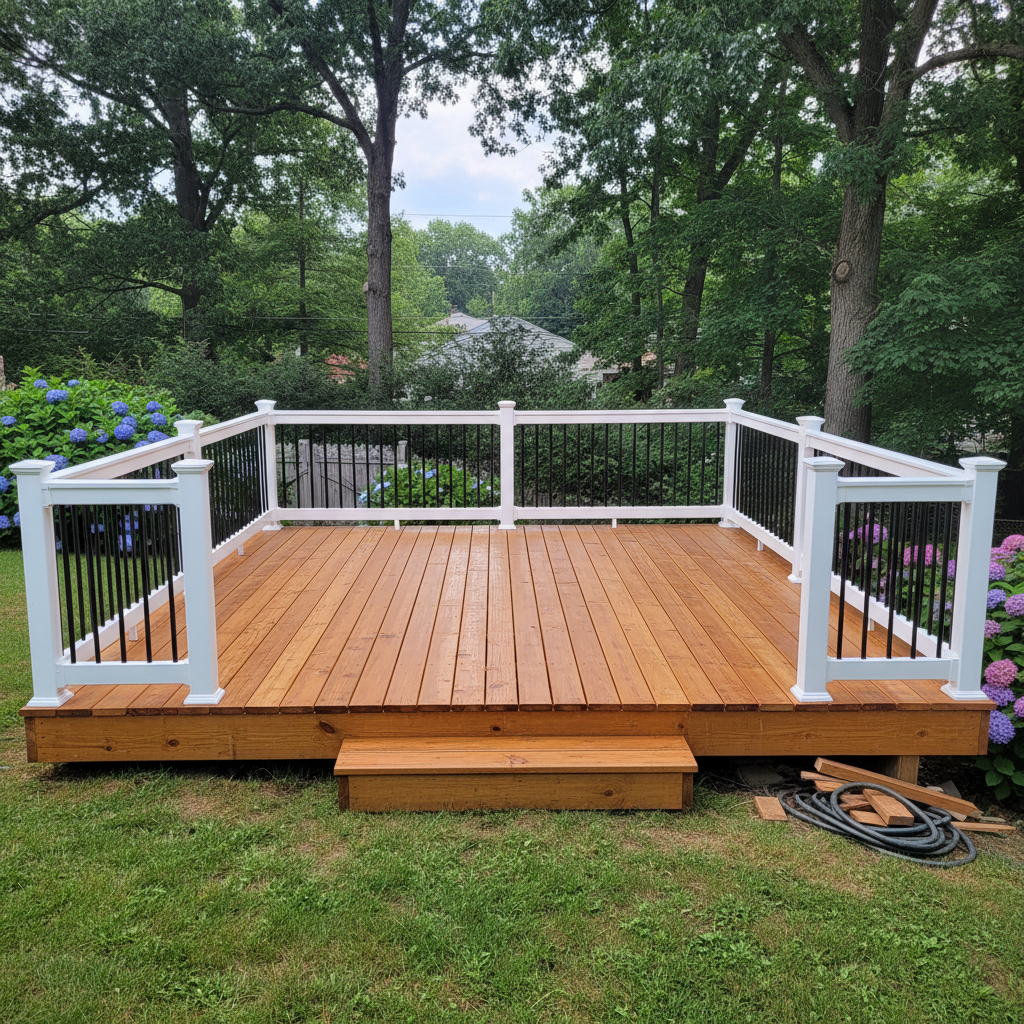
You've got a deck, right? Maybe I built it for you, or maybe it was there when you bought your place. Either way, it's a big part of your home, especially here in New Britain where we actually get to enjoy all four seasons. That deck takes a beating, from our humid summers to those snowy, icy winters. So, how do you make sure it lasts?
Extend Your Deck's Lifespan: It's All About Protection
The biggest thing you can do to make your deck last longer is protect it from the weather. Water is the enemy, plain and simple. We get plenty of it here in Connecticut, whether it's summer downpours or melting snow. If water gets into the wood and just sits there, you're asking for trouble: rot, mold, and eventually, the whole thing could fail structurally.
Regular sealing or staining is super important. For wood decks, I tell people to check their sealant every year. Just sprinkle some water on the surface; if it beads up, you're probably good. If it soaks right in, it's time to reseal. Composite decks don't need sealing, but keeping them clean is still key to stopping mildew from building up and making them look old before their time. And don't forget the underside! Good airflow helps prevent moisture, especially if your deck is low to the ground or over a damp area, which is pretty common in some of the older, shadier neighborhoods around Walnut Hill Park.
What Regular Maintenance Looks Like
This isn't rocket science, but it does take a little time. Here's what I tell my clients:
- Clean it regularly: At least once a year, give your deck a good scrub. A pressure washer can be great, but be careful not to use too high a setting, especially on older wood. You can actually damage the fibers, you know? A good deck cleaner and a stiff brush often do the trick. Get rid of all that accumulated dirt, pollen, and mildew.
- Sweep it often: Leaves, pine needles, and other debris can trap moisture against the deck surface. Sweep them off, especially from between boards and around posts.
- Check fasteners: Screws and nails can work their way loose over time, partly because of the constant expansion and contraction of wood from our temperature swings. Walk around and give them a visual inspection. If you see any popping up, tap them back down or replace them with deck screws if they're nails.
- Inspect railings and stairs: These are high-traffic areas and critical for safety. Give them a good shake. Are they solid? Are there any loose balusters or wobbly posts? Seriously, don't ignore these.
- Trim back vegetation: Keep bushes and trees from touching your deck. They hold moisture against the wood and can contribute to rot and insect problems.
Warning Signs: Don't Wait for a Catastrophe
Your deck will usually tell you when something's wrong, if you're paying attention. Here are some red flags:
- Soft spots or spongy wood: If you step on a board and it feels soft or gives way a little, that's a serious sign of rot. Don't ignore it.
- Cracked or splintered boards: A few small cracks are normal, but large, deep cracks or widespread splintering can mean the wood is drying out too much or failing.
- Loose or corroded fasteners: If screws are rusted or pulling out, or if nails are bent and not holding, your deck's structural integrity is compromised.
- Wobbly railings or posts: This is a major safety hazard. If your railings aren't solid, someone could get hurt.
- Mold or mildew that won't go away: While surface mildew is common, if it's persistent and deep-seated, it could be a sign of chronic moisture issues.
- Discoloration or dark spots: Beyond normal weathering, dark spots can sometimes indicate water penetration and the start of rot.
When to Call a Professional (Like Me)
Look, I'm all for DIY, but some jobs are best left to the pros. If you see any of those serious warning signs – soft spots, major structural issues, or widespread rot – it's time to call someone like Premium Deck Solutions. Don't try to patch over serious rot; it's a temporary fix that can hide bigger problems. We've got the tools and the know-how to properly assess the damage, replace compromised components, and make sure your deck is safe and sound again.
Also, if you're unsure about the extent of damage, or if the repair involves critical structural elements like ledger boards (the board attaching the deck to your house) or support posts, get a professional opinion. Our New Britain climate is tough on decks, and a small problem left unchecked can quickly become a very expensive, and dangerous, one. A little proactive maintenance and knowing when to call for help will keep your deck a safe and enjoyable space for years to come.